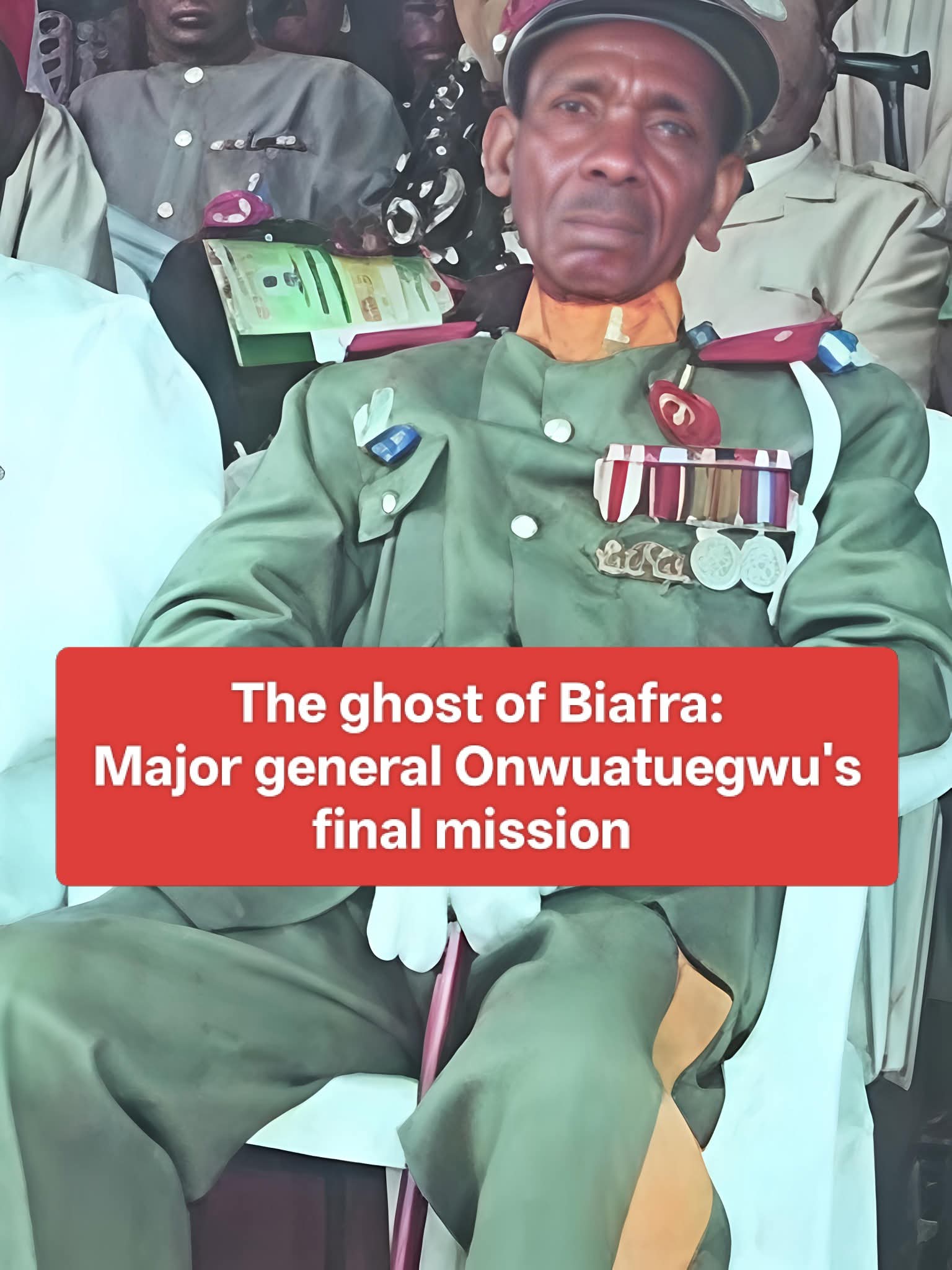

Major Humphrey Chukwuka Onwutuegwu is remembered as one of the most talked-about officers of the Biafran era — a figure many describe as almost mythical, earning the nickname “the Ghost of Biafra.”
He was from the Eastern Region of Nigeria (in today’s Anambra State) and was part of the wave of young Igbo men who joined the Nigerian Army in the early 1960s. At that time, military service was seen as a path of honor. He quickly stood out for intelligence, discipline, and bravery, gaining the respect of those he served with.
When the 1966 political crises erupted — marked by coups, counter-coups, and widespread killings of Igbo civilians and soldiers — Onwutuegwu was directly affected. These events hardened the resolve of many Eastern officers, including him. Feeling that his people had been abandoned by the Nigerian state, he aligned with the rising idea of Biafra as protection and justice for the East.
During the Nigerian–Biafran War (1967–1970), he became one of the officers trusted by Chukwuemeka Odumegwu Ojukwu, Biafra’s Head of State. Accounts describe him as courageous, principled, and fiercely loyal. Soldiers under him reportedly spoke of him as a man who did not hesitate to risk his life for those he led.
These descriptions are based on testimonies and not on formal documentation.
When Biafra collapsed in January 1970 after severe starvation, bombardment, and loss of resources, many senior figures fled into exile — including Ojukwu, who left for Ivory Coast. Onwutuegwu did not follow them.
According to various unverified narratives, he chose to remain for what some described as a final mission — either to face the consequences of defeat with dignity or to respond to what he considered betrayal. None of these accounts are formally confirmed.
Shortly after the surrender, his trail fades from official records. Some stories claim he tried to confront those he believed abandoned the cause; others say he avoided submitting to the Nigerian authorities and went into hiding. His activities during this period remain uncertain.
This uncertainty is the reason he is often portrayed as “the Ghost of Biafra.” Unlike many officers whose post-war paths are well documented — through exile, imprisonment, or reintegration — his fate became surrounded by mystery.
Later reports, also unverified, suggest sightings of him living quietly among displaced families or appearing occasionally at veterans’ gatherings, described as an older man in faded military attire, still carrying the weight of the past.
For many Igbo people, Major Onwutuegwu represents loyalty, courage, and sacrifice. His story echoes the experiences of countless Biafran soldiers who fought believing they were defending their people. His life is often retold as a reminder of how war reshapes a nation and its sons.
He left no published memoirs, but the memories and stories shared by those who claim to have known him have kept his legacy alive. Elders still tell of his fearlessness and dedication.
To younger generations searching for identity and truth, his story continues to reappear—more than military history, it is part of Igbo collective memory. He is remembered as a man who refused to fade away quietly, someone who held on to honor even after the war ended.
Major Onwutuegwu’s name endures as a symbol of commitment, dignity, and refusal to be forgotten — the reason many still call him the Ghost of Biafra.
#igboamaka
#BiafranWar
#igbotiktok”